Evans
Mrs DallowayEvans is the officer who becomes Septimus Warren Smith’s closest wartime companion and whose death shortly before the Armistice continues to shape Septimus’s postwar experience. The novel first presents their connection as an intense, everyday comradeship; after Evans dies in Italy, Septimus’s apparent indifference gives way to recurring visions and messages in which the dead man remains insistently present. Evans is therefore both a person from Septimus’s military past and a central figure in the novel’s account of war trauma, memory, and the failure of others to understand Septimus’s condition.
Identity and Wartime Background
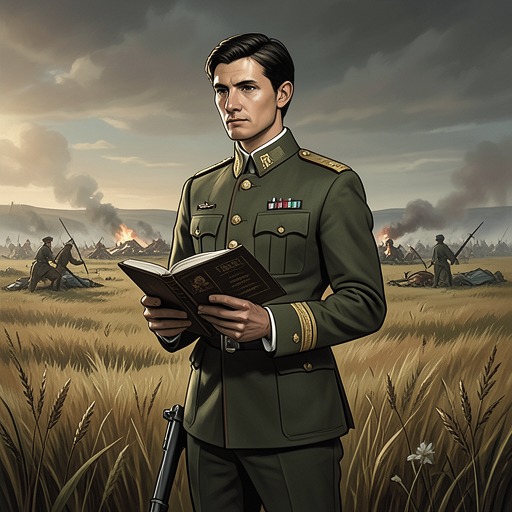
Septimus volunteers early for military service and goes to France believing he is defending an England defined for him by Shakespeare and Isabel Pole. In the trenches, he develops what the narrator calls manliness and is promoted. There he attracts the attention and affection of Evans, an officer whose first name is the only personal identification supplied in the account. Evans is not introduced through a detailed biography of his own; the reader comes to know him chiefly through Septimus’s attachment to him and through the later memories and perceptions that attachment produces.
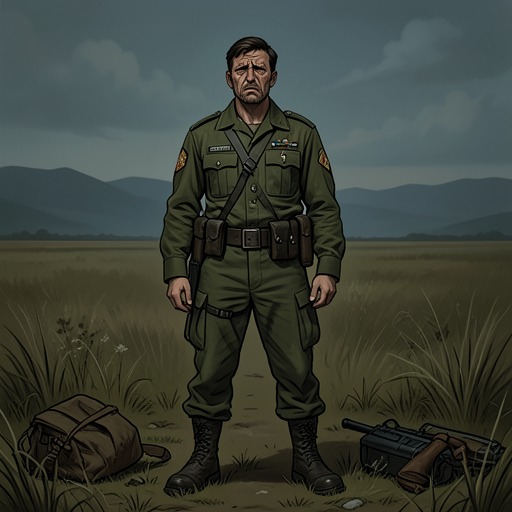
The relationship is conveyed through a comparison to two dogs playing together: they are repeatedly in one another’s company, sharing, fighting, and quarrelling. The image makes their bond feel physical and familiar rather than ceremonious. Their closeness is built through sustained companionship and friction, not through declarations. Rezia, who has seen Evans only once, remembers him as quiet, sturdy, red-haired, and undemonstrative among women. Her brief impression differs in scale from Septimus’s account: she can describe the man she glimpsed, while Septimus’s war experience has made Evans an intimate presence whose loss will outlast the circumstances in which they met.
Death and Septimus’s First Response
Evans is killed in Italy shortly before the Armistice. The narration stresses the striking response of the man who survives him: Septimus congratulates himself on feeling little and on responding reasonably, as though the death has confirmed a lesson the war has taught him. He has passed through friendship, war, and death; he has been promoted, remains under thirty, and believes himself destined to survive. Shells have missed him, and he watches them explode with indifference. The language of survival and self-control sits uneasily beside the loss of a companion with whom he had shared the closeness of trench life.
This reported calm is not a settled release from the friendship. It becomes part of the contrast through which the novel presents Septimus’s later breakdown: he has made his lack of visible grief into evidence that the war has taught him how to feel, yet Evans repeatedly returns to his awareness after the fighting ends. The narration does not give Evans a further independent role after his death. Instead, his continuing significance is registered through the changes in Septimus’s memory, writing, and perception.
Evans in the Postwar Visions
Later, while Rezia is away shopping, Septimus hears a voice from behind a screen and recognizes it as Evans speaking. The dead, the narration says, are with him. This episode makes explicit what Septimus’s earlier composure concealed: Evans is not simply recalled as a lost friend but experienced as present. The scene is narrated through Septimus’s perception, so the reader encounters Evans as part of the rupture between ordinary surroundings and Septimus’s intensely altered sense of reality.
Rezia later observes the recurrence of this belief. Septimus says that his dead friend has come and is singing behind the screen; she writes down what he says. Her record places Evans’s return among the writings about war, Shakespeare, discoveries, and the proposition that there is no death. The difference between them matters: Septimus treats the experience as knowledge and revelation, while Rezia can preserve his words but cannot hear what he hears. Evans thus marks both the force of Septimus’s inner experience and the distance separating the two people who are trying to live with it.
Evans’s presence also enters the couple’s conflict with the medical authority surrounding Septimus. Rezia reports that Septimus becomes excited and declares that he knows the truth, then says that Evans has come and is singing behind the screen. She has heard doctors say that excitement is harmful, but her account shows that the visions are not occasional details she can simply dismiss: they recur in the household and become part of what she must witness and manage. Evans’s return is consequently bound to the struggle over whether Septimus’s experiences will be heard as meaningful to him or reduced to symptoms by others.
Papers, Memory, and Significance
Evans remains present in the papers that Septimus and Rezia have written and kept. When Septimus fears that his writings may be taken from him, Rezia brings the papers and spreads them on the sofa so that they can look through them together. Among their varied drawings and ideas are writings about the dead singing behind rhododendron bushes and repeated references to Evans and messages from the dead. Septimus orders the papers burned, while Rezia protects them, considers some beautiful, and ties them with a piece of silk because she has no envelope. The papers make visible the difference between a private experience that Septimus wants to destroy under pressure and a record Rezia is unwilling to discard.
Evans’s narrative role depends on this movement from companion to absence, and from absence to recurring presence. The first account of the friendship emphasizes its ordinary intimacy; the account of his death emphasizes Septimus’s claimed lack of feeling; the postwar scenes then return to Evans as a voice, a subject of written messages, and a figure in Septimus’s conviction that death is not final. That sequence complicates any simple reading of Septimus’s early indifference as proof that the friendship meant little. Evans is not given a separate postwar life in the narrative, but the persistence of his name and image shows how the war’s dead remain active in the consciousness of those who survived.